


Food factsheet: the key to cost reduction
The food technical data sheet is essential in the management of restaurants and Food and Nutrition Units (UAN).
Firstly, because it guarantees the standardization of food. In this way it is possible to have a clear view of the costs of each food, which simplifies decision making.
In addition, this information optimizes planning. The result is a reduction in costs and the consequent maximization of benefits.
What is the food technical data sheet?
La food factsheet It is a document that details information about a product, such as: composition, nutritional value and storage instructions.
In this way, it helps food companies to follow quality standards in each preparation, which in turn contributes to more precise cost control and operational efficiency.
Essential information in a food technical data sheet includes:
- Product name
- List of ingredients
- Nutritional information
- Portion size
- Energy value
- Allergen information
- Validity date
- Storage instructions
- Manufacturer and contact information
By presenting this data clearly, the technical data sheet becomes a strategic tool that allows companies to increase efficiency and profitability.

Labeled pre-processed foods
The labeling of pre-processed foods provides essential information to both consumers and authorities. Therefore, we can state that some of the functions of this label include:
- Informing the consumer: Labels help consumers to make informed decisions about the food they consume, promoting food safety.
- Complying with regulations: Labeling ensures that production centers follow food safety standards, avoiding legal sanctions.
- Informing about allergens: Information on allergens helps to prevent adverse reactions in consumers, ensuring safety for those with food restrictions.
- Standardizing products: Labeling ensures consistency in products, fostering customer loyalty.
- Facilitating follow-upIn the event of product problems, labeling makes it easier to identify and resolve process failures quickly.
- Improving stock controlLas etiquetas informan las fechas de vencimiento y almacenamiento, lo que ayuda a evitar el desperdicio.
- Helping with marketing and communication: Information on high quality ingredients, product origins or special features can be highlighted to attract and inform customers.
In this way, these clarifications help to ensure that the food sold is safe, of high quality and complies with the standards set by organizations that promote the protection of public health, such as ANVISA (National Health Surveillance Agency) in Brazil.
Food preparation data sheet
The technical food preparation sheet details not only the ingredients, but also the stages of preparation, yield and cost of the inputs. Therefore, a food preparation sheet contains:
- Name of the dish: Identification of the recipe.
- Ingredients: List of all the necessary ingredients, with their exact quantities.
- Preparation method: Step by step of the preparation process, from the beginning to the end.
- Equipment required: Tools and utensils used in the preparation.
- Preparation time: Total time to prepare the dish, including cooking time and other processes.
- IncomeQuantity of portions or volume produced by the recipe.
- Nutritional value: Information on nutrients and calories per portion, when necessary.
- Cost of ingredients: Details of the cost of each ingredient, helping to calculate the total cost of the recipe.
- Sustitutes: Alternative ingredients that can be used, if applicable.
- Storage methods: Instructions on how to properly store the dish or ingredients, if necessary.
The food preparation sheet is essential for standardizing production processes, which allows companies to reduce costs, avoid waste and increase profitability.
Although creating and maintaining these records may seem like a challenge, technological tools make this task easier, ensuring quality and efficiency in food management.

Therefore, the technical data sheet for food preparation not only standardizes, but also increases the quality of food production processes. With the help of technology, this practice is becoming much easier and more effective.
How does the technical food preparation sheet contribute to the standardization and control of food production?
Imagine the kitchen of a restaurant that uses incomplete technical preparation sheets, with incorrect amounts of ingredients and yields. In this situation, the menu planning and cost analysis can quickly become misaligned with real needs. As a result, this will lead to significant financial and nutritional imbalances.
Therefore, for menu planning to work, it is essential for a good cost management that the food preparation sheet is followed. This will ensure that the food meets requirements such as cost, nutritional value and quality. It is also a way of ensuring that the restaurant's production capacity is respected.
What are the advantages of using the food preparation data sheet?
The technical food preparation sheet not only standardizes recipes, but also allows strict control of ingredients and costs. Therefore, by integrating it into an efficient management system, restaurants obtain various benefits, such as:
- Cost reduction: Precise control of inputs avoids waste.
- Increased income: Efficient management contributes to profitability.
- Excellent service: Standardized processes guarantee consistency in quality.
- Customer loyaltyLa regularidad genera confianza.
In addition, a management system will optimize the shopping list, control expenses and provide more efficient stock management, ensuring that all resources are aligned with operational needs.
Although part of this process still depends on manual labor, adopting a ERP management system for the collective feeding service can significantly reduce errors in the short term.
What is a Food and Nutrition Unit (UAN)?
The acronym UAN refers to Food and Nutrition Units, which are responsible for providing collective meals in various locations, such as factories, schools and hospitals. In these units, the technical food preparation sheet is essential to ensure the standardization of food and the quality of production. As a result, its use helps to optimize costs and guarantee operational efficiency.
Food technical sheet: standardization of food served
Each UAN has its own characteristics that influence the standard of the food served, such as:
- Number and profile of diners;
- Contractual rules;
- Consumers' eating habits and preferences;
- Physical structure and site equipment;
- Human and material resources.
The management of these units requires an active dynamic, since many ingredients are involved and production must be fast, as well as ensuring speed and quality. On the other hand, operational problems, such as inadequate execution of tasks by employees, can cause variations in production, compromising the quality of the final product.
Food technical sheets as quality strategies in production.
The food preparation worksheet is a valuable tool for nutritionists, as it enables effective management of inputs and detailed planning. With it you can:
- Plan menus according to the estimated number of diners;
- Sizing up the volume of purchases;
- Calculate the costs of the preparations;
- Control spending;
- Increase the yield of preparations;
- Adjusting the costs involved in food production;
- Saving time in the production process.
For this reason, the use of an appropriate management system is essential. With the right system, it is possible to automate processes, ensure the accuracy of data and facilitate the updating of technical files. This not only improves operational efficiency, but also provides a clear and accessible view of costs and revenue performance.
In this way, nutritionists and managers can make more informed decisions, optimizing the quality of food and promoting the economic sustainability of Food and Nutrition Units.
Menu planning and its importance
As you can see, menu planning is crucial. This is because it ensures that the food meets requirements such as cost, nutritional characteristics and hygienic and sanitary quality, all adapted to the production capacity of the corporate restaurant.
Finally, it is necessary to emphasize once again that having automated processes that facilitate the standardization of the production of collective meals not only optimizes the planning of the menu, but also improves the daily work of the nutritionist and employees.
We have prepared an e-book on the subject; click here and download it for free

The importance of optimizing CMV
If you have come this far, now is the time to tell you that optimizing the Cost of Goods Sold (COGS) will also be fundamental in this cost reduction process. This is because the COGS has a direct impact on the profit margin and the final cost transferred to the customer.
In short, calculating the CMV involves adding up the initial stock of inputs to the purchases for the period and then leaving the final stock.
CMV = Initial Stock + Period Purchases - Final Stock
In this way, the CMV allows you to better understand the costs involved in operating your business, and with this it is possible to set more appropriate prices and maximize profits.
If you want to delve deeper into this topic, check out our blog on how to calculate, reduce costs and make money by calculating the CMV!
How the technical food preparation sheet contributes to the calculation of the CMV
To calculate the COGS, it is necessary to know precisely the ingredients and quantities used in each dish. Therefore, the technical sheet provides this detailed information, allowing the manager to calculate costs much more accurately. In addition:
- The technical data sheet helps cost control, by comparing the planned values with the actual values. This makes it possible to identify possible deviations, such as waste or variations in purchase prices, facilitating corrective action.
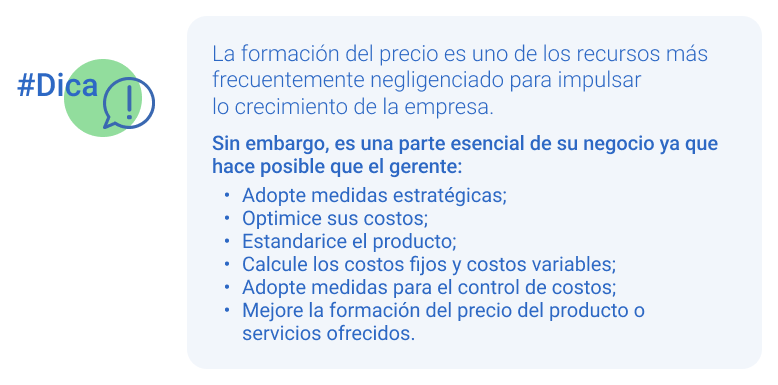
- From the calculated CMV, establishments can set appropriate prices for their products, taking into account both direct costs and the desired margin of benefit.
- Finally, the technical food preparation sheet also ensures that each dish is prepared in a consistent manner, with the right ingredients. same quality and taste, This is an important factor in customer satisfaction and maintaining the restaurant's reputation.
To keep this process organized and efficient, having a collective food management system is essential. These systems offer indicators and reports that provide a clear and strategic vision of the process. cost management and contracts, enabling rapid and assertive decision-making.
Corporate restaurant and catering system
The adoption of a collective food management system increases the productive, commercial and financial efficiency of food companies. In addition, the technology simplifies strategic decision-making by allowing quick access to detailed food information.
See here the conversation we had with Pedro Suassuna, Cozzi's managing partner, who is a Teknisa client:
Companies are currently investing in technological solutions not only to improve product quality control, but also to ensure mobility in the production tracking process, as well as enabling real-time process management.
Therefore, we can safely say that these tools not only optimize operations, but also help to reduce costs and improve the quality of the services provided.
The role of software in standardizing production processes
The lack of standardization in food production processes can result in financial crises for companies. When the quantity of inputs in a recipe varies, cost control becomes challenging and compromises the need for purchases.
In this context, food management software helps to correct problems quickly and efficiently, guaranteeing the quality and safety of products and, as a result, helping to reduce operating costs.
The use of specialized systems and applications
The use of specialized systems and applications, such as TecFood, simplifies both the creation and maintenance of technical food sheets, allowing dishes to be priced with greater precision and facilitating order and stock control. In addition, these tools are essential for identifying consumption standards and minimizing waste, which results in more efficient and profitable management for the business.
The preparation and application of technical food sheets are fundamental in the management of food establishments, providing essential information for strategic decisions and ensuring the quality and profitability of the establishments.

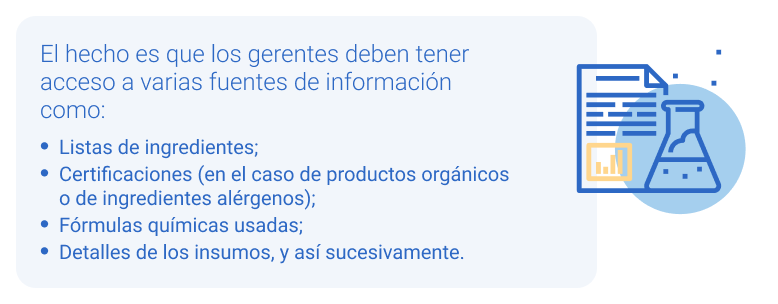
Therefore, easy access for managers to detailed information about food products is crucial to maintaining control of food quality. Without standardized procedures, such as the use of food technical data sheets, corporate restaurants and Food and Nutrition Units (UAN) can lose control of the quality of the final product.
Conclusion
Constant economic transformations lead food companies to seek continuous improvements in their internal processes to ensure profitability. In addition, these changes aim to increase production efficiency and guarantee food safety in restaurants. In this context, the use of food technical data sheets should be considered a fundamental strategic tool to optimize production, making collective meals healthier, safer and more profitable.
Therefore, in order to achieve good results, it is essential that technical food preparation sheets describe in detail all the requirements involved in making dishes or food products. In addition, they must include functional and technical aspects of each item, which facilitates all stages of the production process, ensuring quality, standardization and the right price.
Therefore, if your company wants to optimize process management and ensure competitiveness, it is essential to adopt a management system aimed at managing the production of collective foods, such as Teknisa's TecFood software. This is because it will help to control and improve processes, providing more organized, efficient and profitable management.
Contact us for more information on how we can help you transform your production line and increase the quality of the services you provide.
About the Author: Deysi Reategui

- 1
- 2
Interested in finding out more?
So don't hesitate to get in touch with one of our consultants. The chat is without obligation! :)